300 km Through the Night — My Moonrakers & Sunseekers Audax Story
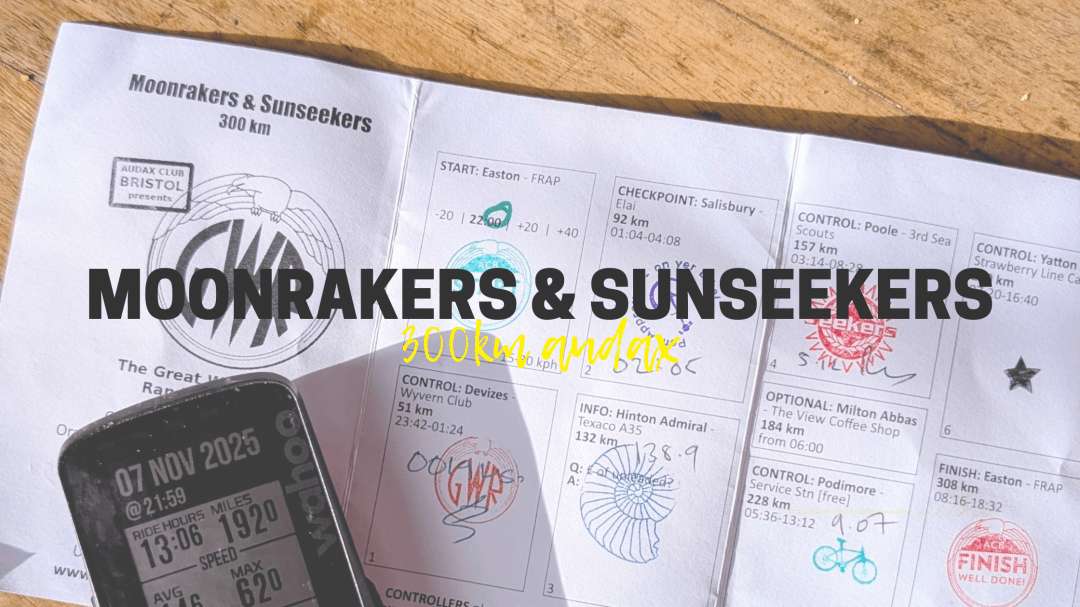
If you’ve ever wondered what it feels like to ride 300 km through the night – across counties, chasing control points and eventually the rising sun – then here’s my honest account of doing exactly that.
It had been a long time since I’d ridden that kind of distance – I actually rode this same Audax 4 years ago. A friend mentioned they were signing up, and before my sensible brain could object, I was in too.
The Moonrakers & Sunseekers 300 km Audax is equal parts adventure, test of grit, and rolling buffet on wheels.
And for me, after a long period of stomach issues, withdrawing from Race Across America in 2022, and trying to re-find my ultra mindset after having a baby and a hernia, it became more than just a ride. I wanted to test my fueling, hydration, pacing strategies and see what actually worked.
Here’s how it went, and what I’d do differently next time.
Rolling Out Into the Dark
Starting an Audax at 10 pm is a strange thing. While everyone else is winding down for the day, you’re clipping in for the first of many hours in the dark. Quiet roads, cold air, the hum of tyres, and that constant internal reminder:
Don’t think about the distance. Just ride.
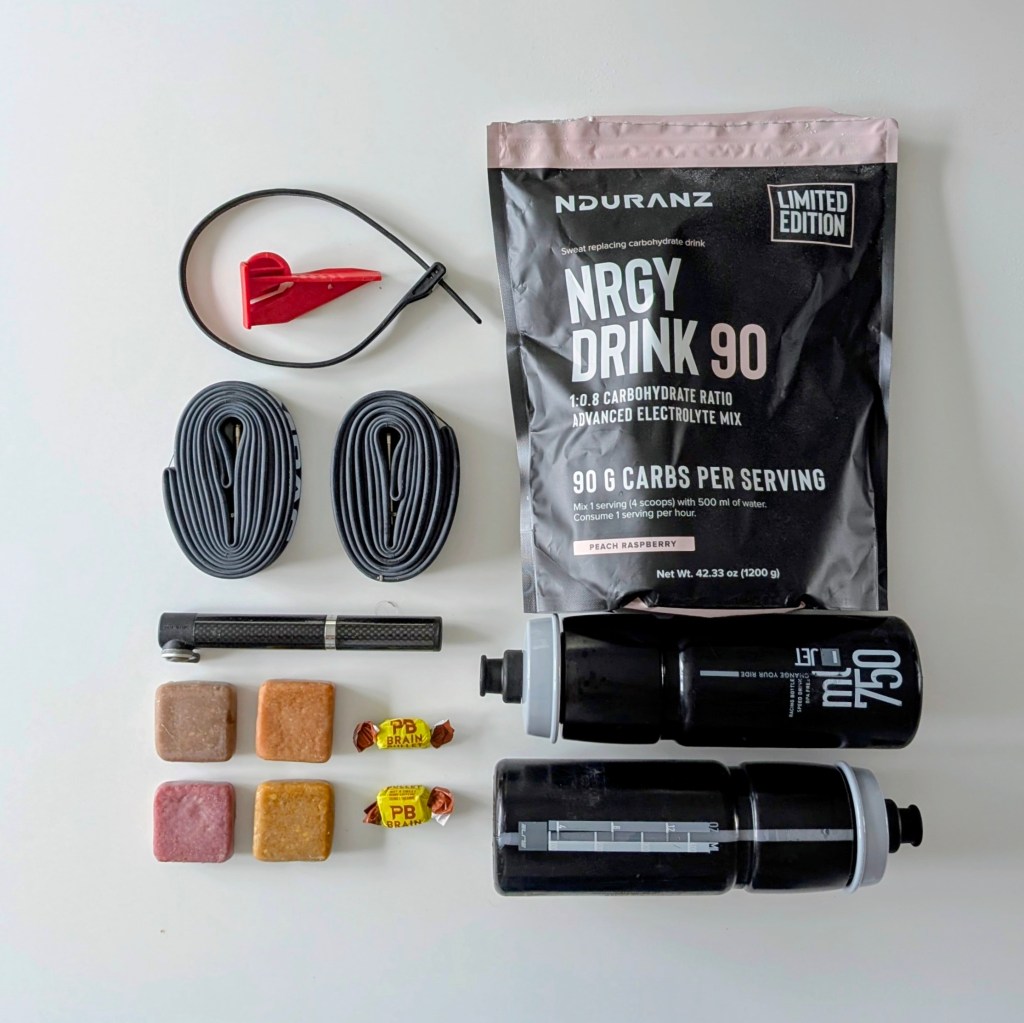
My plan was to be as self-sufficient as possible. I made a pretty detailed plan ahead of the event and then packed a frame bag full of bars, pre-portioned drink powders. I started out with:
Bottle A: 750 ml water + 6 scoops Nduranz 90 (carbs + sodium)
Bottle B: 750 ml electrolyte drink (500 mg sodium)
The first 50 km went by pretty smoothly, just riding, chatting and enjoying the evening until a double puncture for me slowed us down. Classic Audax chaos. But the rhythm returned, and so did the focus on early, consistent fueling.
Checkpoints, Cake & Cadence
Audax isn’t a race. They’re self-management challenges. Which means:
Eat early
Drink often
Don’t let the tank run low
Ride the pace you can sustain for hours
Every 70–80 km a checkpoint gave me a chance to refill bottles and grab some volunteer-baked magic – chocolate cake, rice crispy squares, flapjack – all the good stuff.
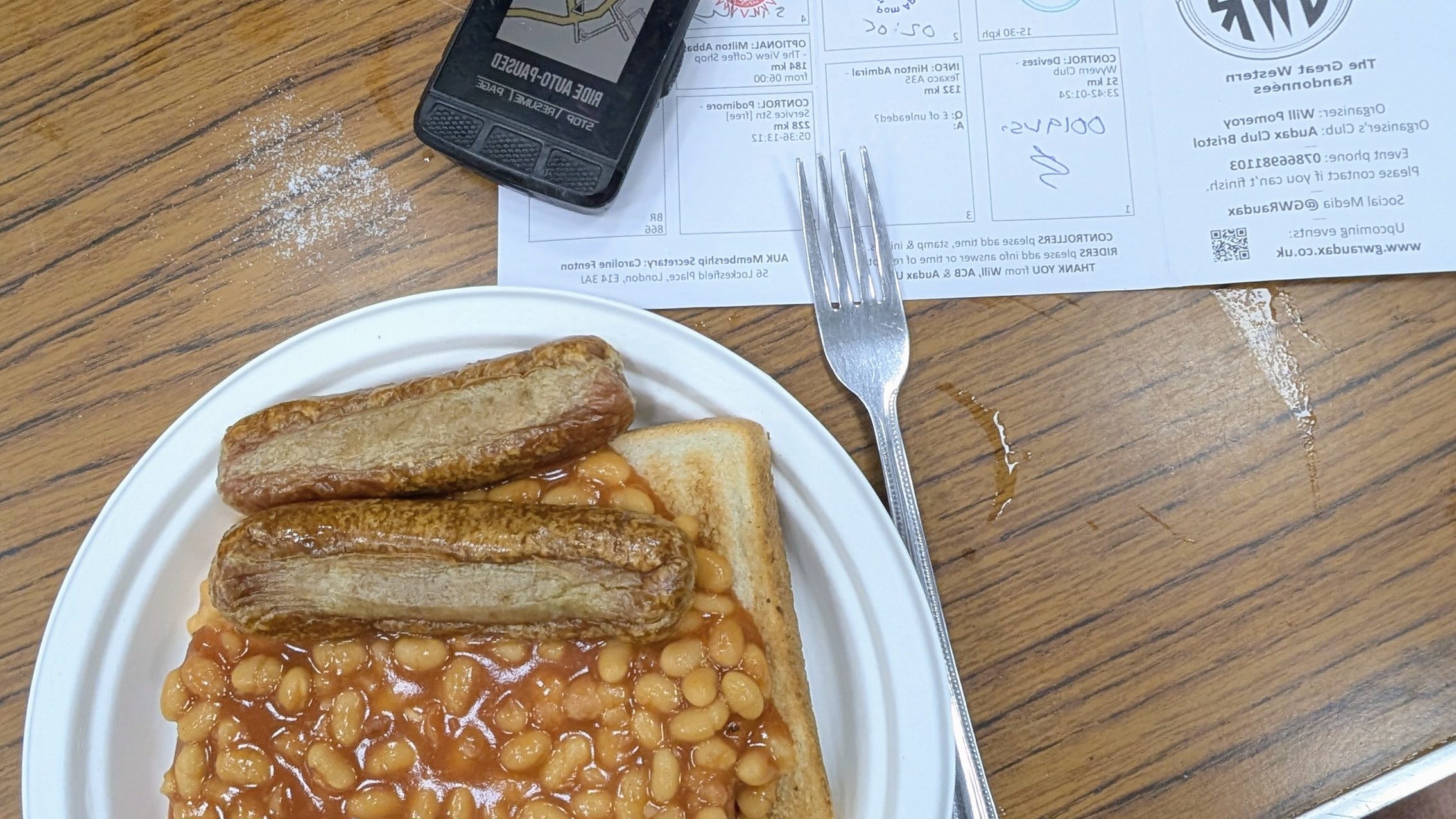
We reached the halfway point at Bournemouth and Poole Harbour around 5 am where I inhaled beans and sausages on toast. Not gourmet, but exactly what my body wanted at that moment, just warm, filling food.
Across the full 300 km I managed to average ~90 g of carbs per hour, which is excellent endurance fueling – but we’ll get to that later.
When the GI Issue Hit
The beans were the turning point in many ways…. Suddenly the combination of a hot meal, hours of solid bars and concentrated liquid carbs caught up with me. Heavy stomach. Full. Zero interest in eating.
This wasn’t under-fuelling – I was on track.
It was simply too much solid food too close together, in the cold, while riding through my normal sleeping hours.
So I backed off.
I switched to plain water temporarily, let my stomach settle, and stopped forcing solids. After about 45 minutes, I reintroduced my fuel bottle slowly, and it worked. Power came back. Pedals turned smoothly again.
This adjustment saved my ride.
The Data – What Actually Happened
Thanks to Flowbio (a wearable Sweat Sensor), my power data and general ride notes, here’s what was happening under the hood;
Carbohydrate
Total intake: ~1,219 g
Average: ~93 g/h
Enough to maintain steady power output without bonking.
Electrolytes
Total sodium loss: 4,902 mg
Sodium consumed: ~4,900–5,175 mg
Almost perfect 1:1 replacement.
Hydration
Total fluid loss: ~5.84 L
Intake: ~5.0–5.2 L
~85% replacement – ideal for cool night temperatures.
Everything pointed toward well-executed fueling and pacing…aside from that mid-ride GI wobble. But where previously these have derailed me, being sensible, adjusting and slowing down made all the difference.
Simply click the image to visit their website
The Finish – Rolling Back Into Bristol
As the sun rose, fatigue slowly replaced the adrenaline. Not bonking, not dehydration, just honest, accumulated exhaustion.
We rolled into HQ just after 1 pm having been awake for far too long. It was tough. It was beautiful. And it was exactly what I needed and I’m so glad I did it – big thanks to John, my ride buddy, we both had our ups and downs but that’s the beauty of riding together, you keep each other going.
What I’d Change
A few honest takeaways from my longest ride in a good while;
1. Keep Nduranz 90 as the fuelling backbone – It delivered carbs + sodium, mixed easily, and didn’t upset my stomach.
2. Space out solid foods more deliberately – Too many solids too close equaled GI slowdown. Simple fix that’s either adjust the plan or adjust on the fly, either way, I’m more confident in myself to manage these issues.
3. Aim for ~85 g/h if using more solids – 90 g/h is fine for me, but not when a lot of that comes from solid bars.
4. Use more liquid carbs through the night – Digestion slows in dark, cold conditions.
5. Carry an emergency sodium sachet – Even though I matched sodium well, having backup is smart.
Simply click the image to visit their website
Final Thoughts – Why This Audax Mattered
Long night rides are humbling. They strip away pacing ego, force you to listen to your body, and remind you what your mind does when everything is quiet and dark.
I didn’t chase a record. I didn’t race.
I just rode steadily, fueled intentionally, adapted when things got rough, and finished strong.




 Guy Stapleford Ultra